Analysis
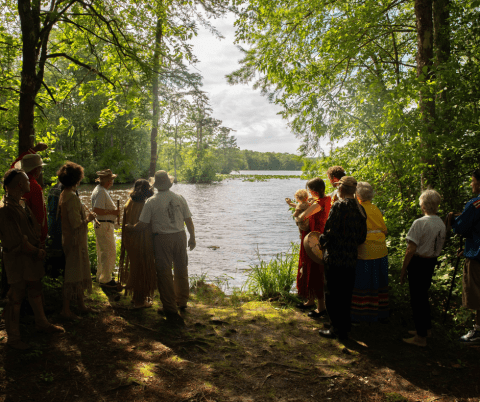
Members of the Pocomoke Indian Nation gather at Shad Landing State Park in Snow Hill, MD. (Credit: Maryland State Arts Council)
Notebook Reflection
Based on your exploration of Native Americans in Maryland and the sources in this lesson, how do Native American communities in Maryland continue to live, lead, and maintain connections to their culture and land today?
Making Connections
Choose one of the statements below:
- “I think it’s very important for the public to know that the descendants of the Indigenous people are still here.” - Chief Donna Abbott of the Nause-Waiwash Band of Indians
- “We’re here, we’re thriving, we’re living amongst you, and we’re not different than you.” - Tiara Thomas of the Piscataway Conoy Tribe
- “There is no Maryland history without this piece of it.” - Cheryl Howard Doughty of the Pocomoke Indian Nation
What does the statement you chose mean? How does it connect to the idea that Native American communities are active and present in Maryland today?
Claim–Evidence–Reasoning (CER) Response
How do Native American communities in Maryland continue to shape life in their communities today? In your response:
- Make a claim about Native communities today.
- Use at least two pieces of evidence from the lesson (maps, interviews, videos, images, or artifacts).
- Explain how your evidence supports your claim.
Wrap-Up
Native American nations in Maryland are living, active communities that continue to adapt, lead, and maintain strong connections to their culture, land, and history. While colonization, land loss, and changing environments have created challenges, Native nations have continued to preserve their identities and strengthen their communities through leadership, cultural traditions, education, and stewardship of the land.
In this lesson, you:
- Identified Native American nations in Maryland today and where they live using maps and demographic data
- Examined how recognition by state and federal governments relates to tribal sovereignty
- Explored how Native cultures continue through traditions such as dance, storytelling, and community gatherings
- Learned how Native communities are active today through leadership, education, public history projects, and technology
- Analyzed how Native nations maintain connections to ancestral lands and respond to environmental and cultural threats
By examining these sources, you learned that Native American communities are not only part of history - they are part of the present and future of Maryland. Their continued presence shows resilience, adaptation, and a strong connection to identity, culture, and place.