Recognition and Sovereignty
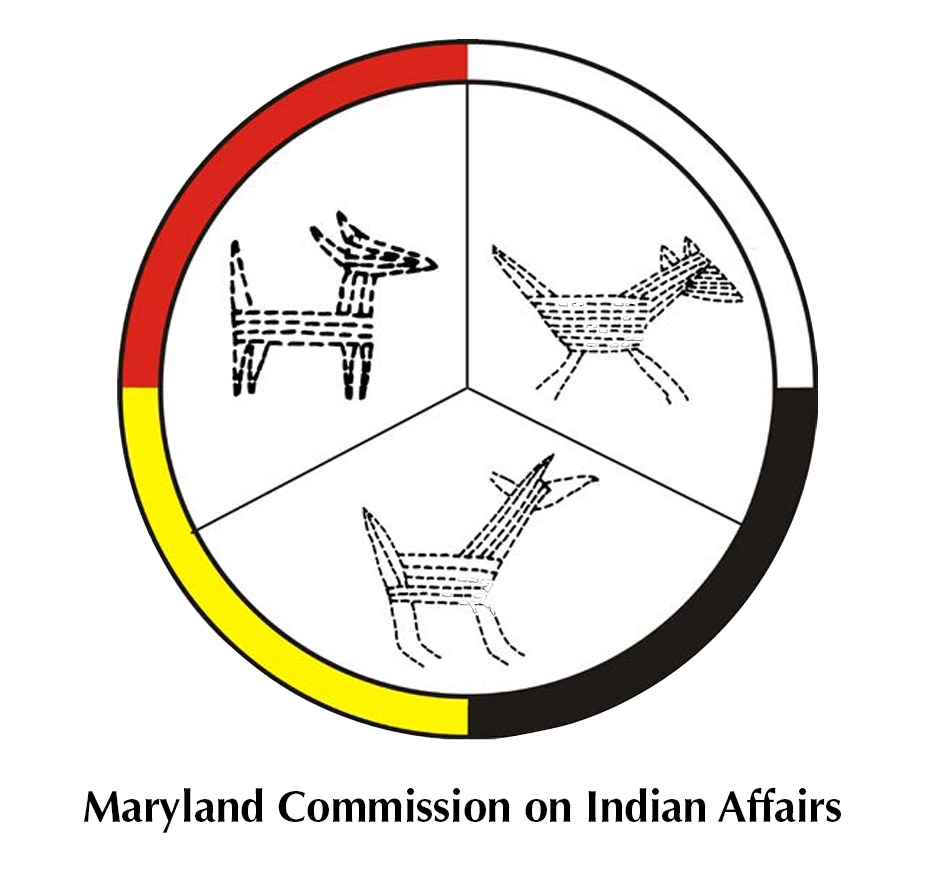
The logo of the Maryland Commission on Indian Affairs includes ancient drawings found in Maryland and colors representing the four directions (north, south, east, and west).
Essential Question:
Native American nations are governments with their own histories, leaders, and communities. They have the right to govern themselves, a power known as sovereignty. Some tribes are officially recognized by state or federal governments, while others are still working toward tribal recognition.
In this section, you will learn what recognition means, why it matters, and how Native nations continue to advocate for their rights and identity today.
Federal and state recognition are ways that governments officially acknowledge Native American tribes as distinct nations.
- Federal recognition by the United States government provides tribes with a formal government-to-government relationship and access to certain programs, legal protections, benefits, and funding through agencies such as the Bureau of Indian Affairs.
- State recognition means a state government officially recognizes a tribe, even if it is not federally recognized.
Recognition is important because it supports tribal sovereignty, protects tribal identity and culture, and acknowledges the long history and continued presence of Native nations today.
At the same time, many tribes are frustrated by how difficult the recognition process can be. Some Native communities believe it is unfair to have to seek approval from governments that have historically oppressed them or attempted to erase their cultures.
Achieving recognition is a rigorous and time-consuming process. Tribes often need to hire lawyers and researchers, which requires significant money and resources. They must provide historical evidence demonstrating that they have existed as a distinct community and have been identified as Native people continuously since 1900. These requirements can be difficult to meet because colonization and government policies disrupted Native communities and records.
As of 2026, there are 575 federally recognized tribes in the United States, and about 400 tribes that are not federally recognized. Some of these tribes are recognized by their state governments. In Maryland, there are no federally recognized tribes. However, the Piscataway Conoy Tribe, the Piscataway Indian Nation, and the Accohannock Indian Tribe are officially recognized by the state of Maryland.
Select and place the words from the Word Bank in the correct blanks in each sentence.