St. Mary’s Learns from Jamestown
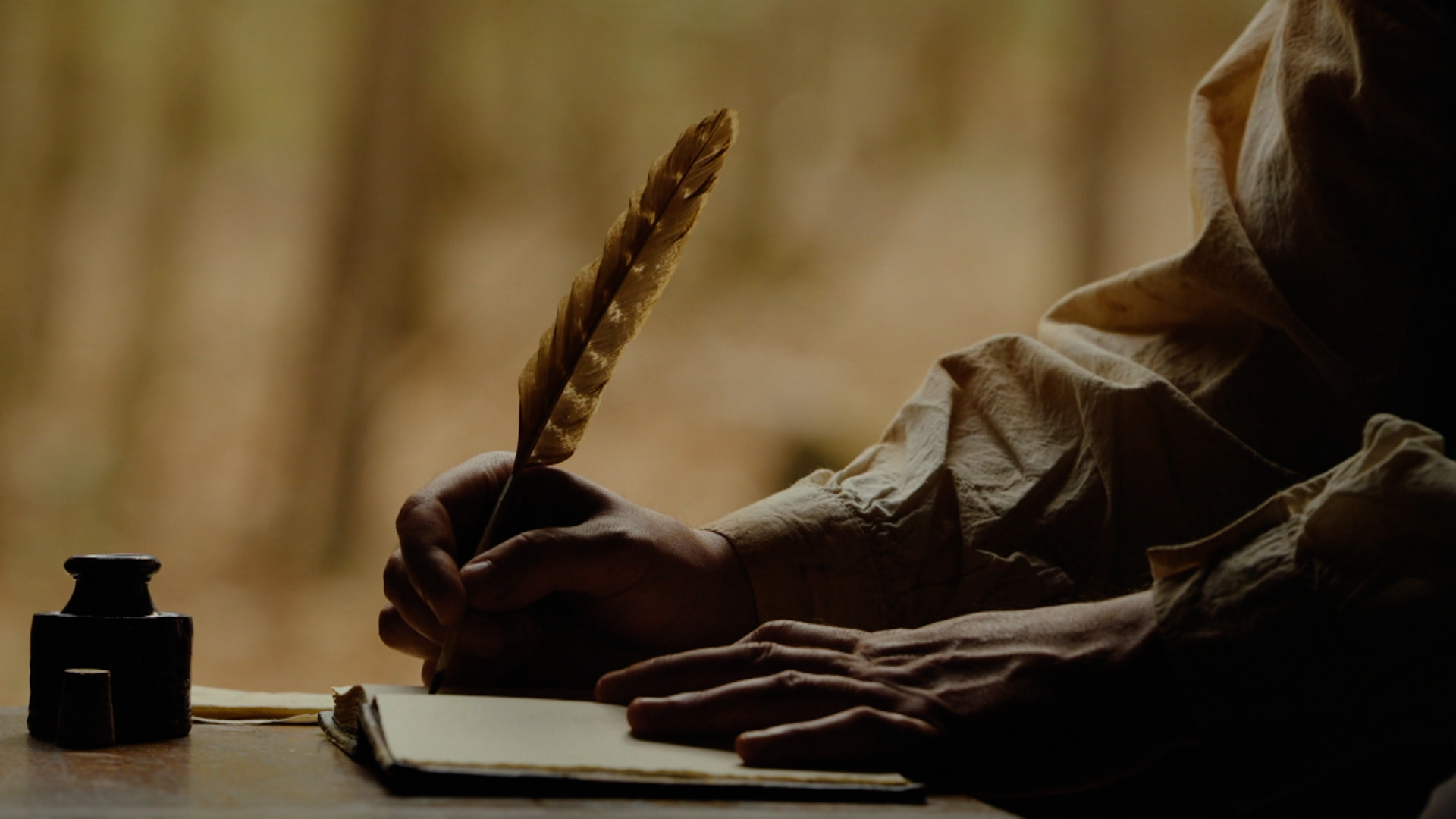
A colonial reenactor keeps records of life in St. Mary's City with a feather quill and ink.
Essential Question:
St. Mary’s City was founded 27 years after the settlement of Jamestown. Leaders of the Maryland colony learned from both the challenges and successes of Jamestown.
Select each tab to read or examine the following documents. How did Maryland colonists make different choices from those at Jamestown? Use your notebook to write down examples from these documents.
Dr. David Terry
Associate Professor of History, Coordinator of Museum Studies
Morgan State University
In 1610, the Virginia colony experienced what was known as the "starving time." Because of their failures over the previous three years and their lack of understanding of what it took to operate a successful colony, they struggled to feed themselves. Many people did not survive.
Maryland settlers learned from Virginia and some New England colonies. They understood what would be necessary to form a successful colony. Because of this, they did not experience the “starving time” as Virginia did.
Maryland settlers were also Associate Professor of History, Coordinator of Museum Studies<br> Morgan State Universitys in that they did not come into such a hotly contested environment as the Virginias settlers did. The Virginians were often aggressive toward the Native Americans. Very quickly upon arriving on their new land, most Maryland settlers wanted to co-exist with the Native Americans. Many Marylanders tried to make peace and negotiate as much as that was possible with Native Americans.
Dr. David Terry
Associate Professor of History, Coordinator of Museum Studies
Morgan State University
Early on, one of Virginia's successes was its economy. Tobacco came to Virginia about 15 years after the colony began. Marylanders, particularly those who organized the Maryland venture, saw what was taking place. George Calvert, for example, who began the process that ultimately led to the establishment of Maryland, was very much involved in the Virginia process.
By the time Maryland settlers arrived in 1634, they understood that food such as corn and wheat was important. Tobacco was also important. Very quickly, Marylanders learned to produce tobacco in large quantities, enabling investors to make a profit.
St. Mary's Fort
St. Mary’s Fort was the very first settlement made in the area. Examine this illustration of what it might have looked like. What do you notice that would have helped colonists survive?
Inside the palisade (fence), you will notice several small plots of land where people would have grown food to eat and an enclosure with a cow. Outside the settlement, there are larger fields that might represent tobacco, which colonists would sell for money. There are also oval-shaped witchotts (Indigenous dwellings) that the Yaocomico allowed colonists to use.
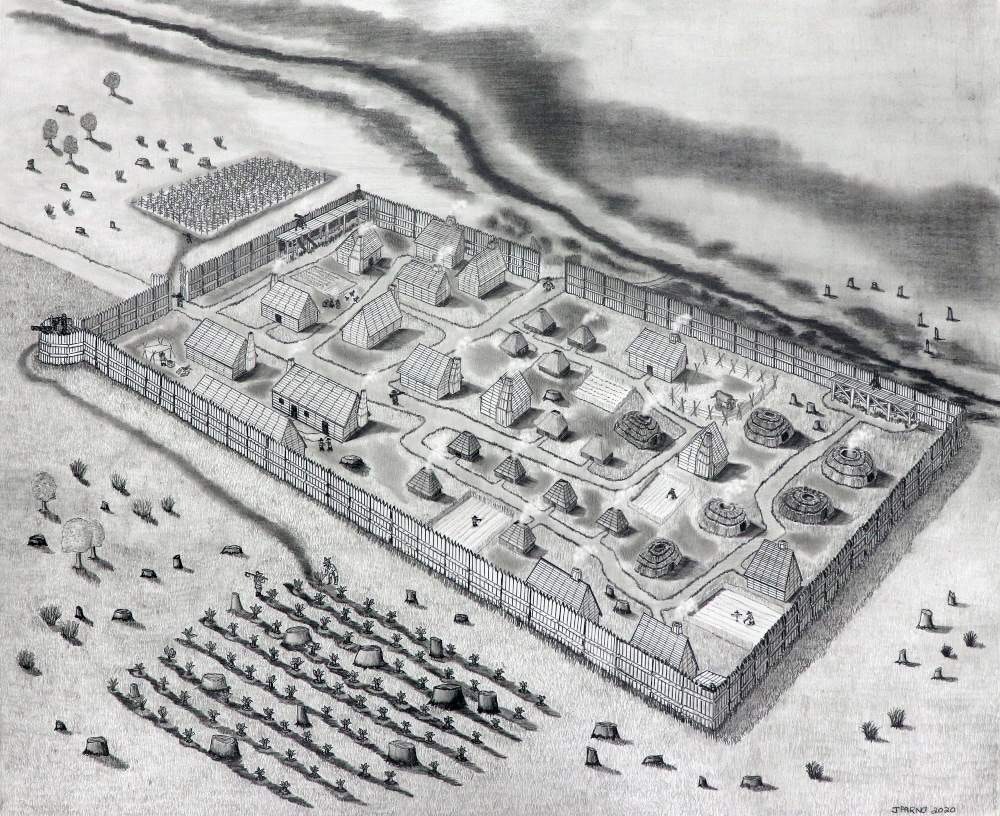
Illustration of St. Mary’s Fort as it likely appeared during its construction in 1634 fort by Jeffrey R. Parno. Courtesy of Historic St. Mary’s City.
Knowledge Check
Read the questions and choose the best answer. Select “Next” to move to the next question. When you are done, check your thinking on each question.
Learning from the Past
See how St. Mary’s City learned from the mistakes made in Jamestown. Select and drag each effect to match its cause. When you are finished, check your answers to see if you are right!