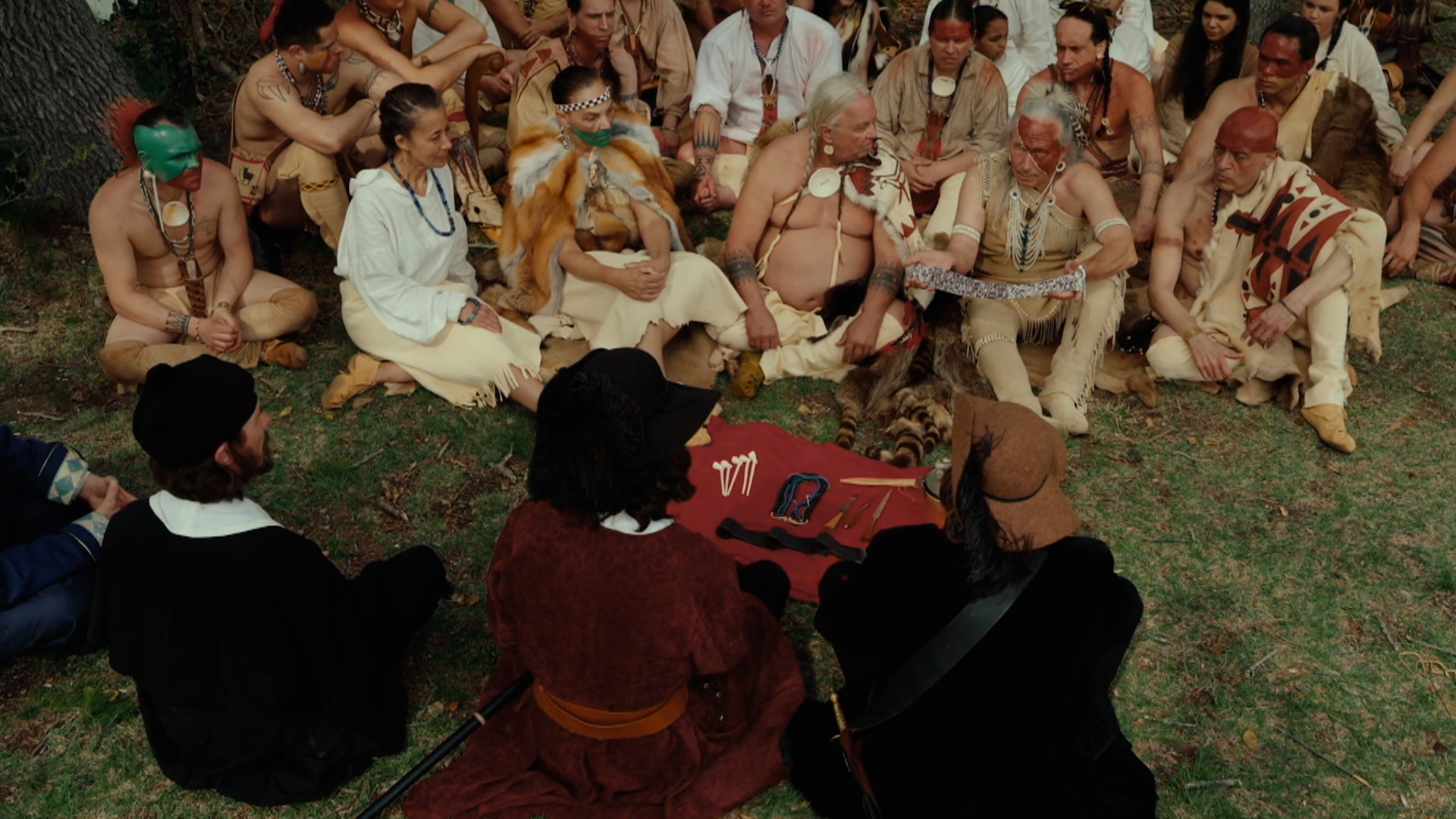
Comparing and Contrasting Indigenous vs. European Land Use and Treaties
Grade 7
Indigenous vs. European Land Use and Treaties
For thousands of years before Europeans arrived, Indigenous nations in Maryland developed complex societies shaped by deep relationships with the land, waterways, and seasons. Separated by an ocean for millennia, Indigenous peoples and European colonists developed distinct understandings of land use, governance, and sovereignty. When their cultures collided in 17th‑century Maryland, these differences shaped every aspect of their interactions.
including how each group understood ownership, stewardship, and responsibility to place. Students will also analyze how treaties (often written, interpreted, and enforced by colonial authorities) were used to designate and deny Indigenous sovereignty.
Teacher's Guide and Related Standards
Students will analyze interactions between Indigenous peoples and European settlers in Maryland by contrasting their approaches to land use and examining how treaties were used to designate and deny Indigenous sovereignty.
- How did different Indigenous and European understandings of land and treaty‑making shape power, sovereignty, and relationships in colonial Maryland?
Film Clip 1
This clip discusses Chief Wannas’s first encounter with Leonard Calvert. It features Rico Newman, elder of the Chopico Band of Piscataway-Conoy Indians, and Chief Mark Tayac of the Piscataway Nation speaking about the encounter.
- What purpose does the Wampum Belt serve in the Piscataway culture?
- Rico Newman says that Calvert “failed to disclose what he knew” to Chief Wannas. What does this mean? How does this failure to disclose deny Piscataway sovereignty?
- Chief Mark Tayac says Indigenous people did not have a concept of private land ownership. According to him, how did the Piscataway view land agreements with English colonists?
Film Clip 2
This clip discusses the status of Indigenous people in society under colonial law. It features Rico Newman, Norris Howard, council member of the Pocomoke Indian Nation, and Chief Mark Tayac.
- Despite his confession, John Elkins is found not guilty of the murder of the Yaocomico Chief. How does this verdict deny Indigenous sovereignty?
- How do the English colonists view and use land? How does this perspective differ from the way Indigenous people view and use land?
Vocabulary
Supplemental Enrichment Activities
Thinkport Education: Secondary | Indigenous Maryland Inquiry Kits: Indigenous Leaders and Tribal Governance
Indigenous leaders experienced power challenges and shifts after the arrival of Europeans.
Explore this inquiry kit to discover:
- What different types of leadership or words for leaders have Indigenous people used in Maryland?
- What are some of a chief or leader's responsibilities?
- How have Indigenous leaders interacted with colonial and settler governments throughout history?
» Go to Indigenous Maryland Inquiry Kits: Indigenous Leaders and Tribal Governance
Native Knowledge 360 - Northern Plains Treaties: Is a Treaty Intended to be Forever?
Indigenous nations and European settlers approached treaties and governance with very different values and purposes.
Play the video from Native Knowledge 360. The video is the first item in the row titled “Treaties Matter.” As you watch the video, answer the following questions: What are treaties? What was typically the context of tribal leaders agreeing to the terms? What does sovereignty mean for some Indigenous people in the present day?
» Go to Northern Plains Treaties: Is a Treaty Intended to be Forever? Video
Archives of Maryland Online - Proceedings and Acts of the General Assembly, April 1666 - June 1676 [Treaty of Maryland with Multiple Nations and Reparation
Treaties in early Maryland were used to designate and deny sovereignty to Indigenous people.
Read the April 1666 Treaty of Maryland with Multiple Nations and Reparation (pages 25-27). What kinds of behaviors and interactions were addressed in the terms? What did the treaty allow the tribes that were a part of it? How did it limit them?