Comparing and Contrasting Indigenous vs. European Land Use and Treaties
Grade 7
Teacher’s Guide and Related Standards
In this lesson, students will examine contrasting Indigenous and European perspectives on land, including how each group understood ownership, stewardship, and responsibility to place. Students will also analyze how treaties were used to designate and deny Indigenous sovereignty.
Procedure
INTRODUCTION (20 minutes)
- Have students discuss two warm-up questions:
- What does “land ownership” mean?
- Why is it important for a community to be able to self-govern?
- Review the vocabulary words with students.
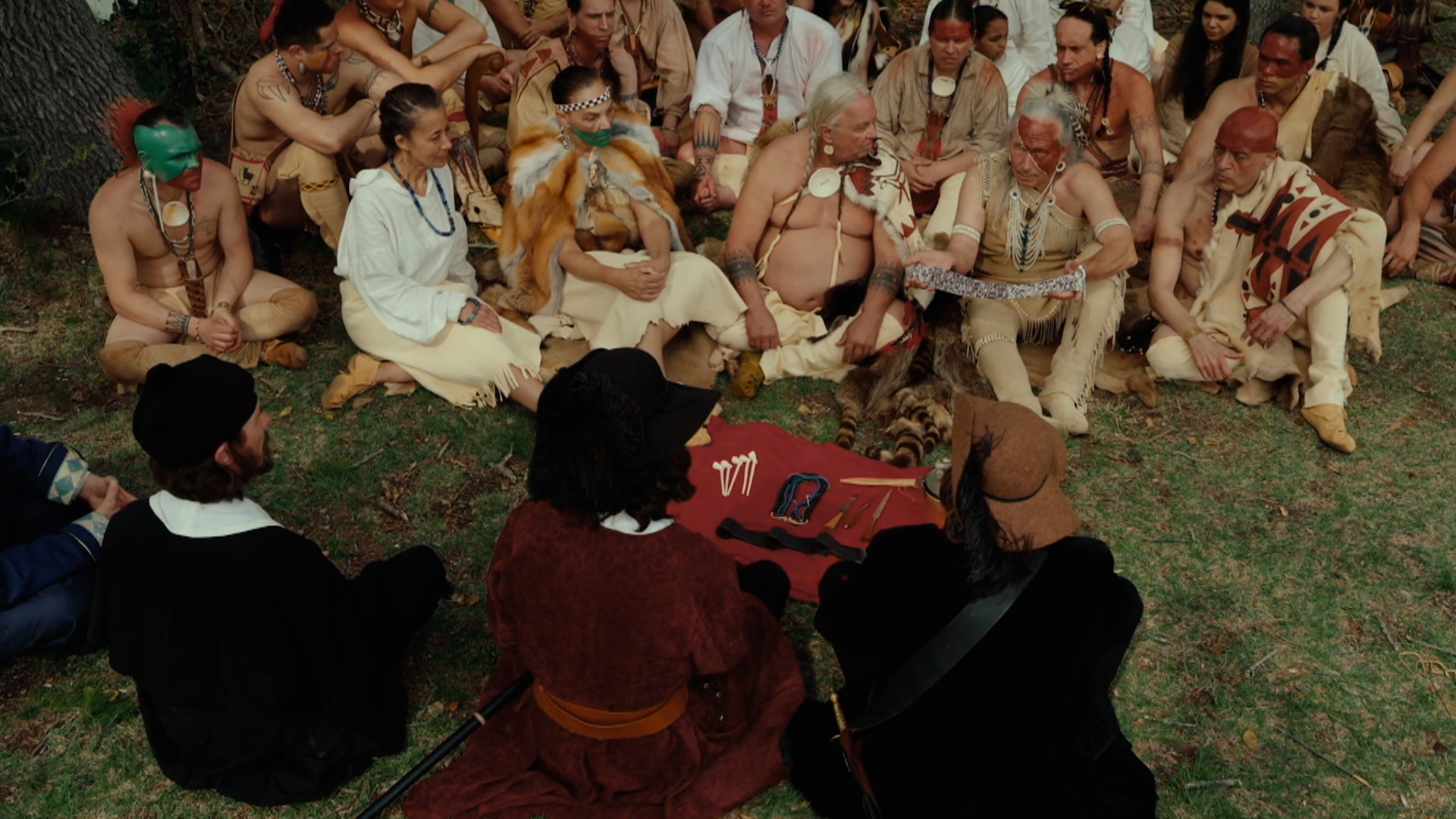
- Watch the video clip. Have students respond to the Thinking Questions in Think-Pair-Share format.
EXTENSION (20-40 minutes)
Complete the supplemental extension activities with students, as you see fit.
SUMMATIVE ASSESSMENT (30 minutes)
- Have students apply their newfound knowledge by using the Claim, Evidence, Reasoning (CER) framework to analyze the lesson and support their responses using evidence from the videos and activity resources. CER Question: How did different Indigenous and European understandings of land and treaty‑making shape power, sovereignty, and relationships in colonial Maryland?
- See the rubric below.
REFLECTION (10 minutes)
- Have students respond to the following prompts:?
- WWhat is one thing you learned today about how Indigenous nations and European settlers understood land differently?
- How did different ideas about land lead to conflicts over power?
Standards
MSDE 6/7.8.3
Students will examine how regional interaction between European settlers and native populations altered the Americas by:
- Contrasting Indigenous and European approaches to land use and how treaties were used to designate and deny sovereignty.
- D2.His.6.6-8. Analyze how people’s perspectives influenced what information is available in the historical sources they created.
CER Rubric (Total: 9 Points)
| Category | 3 Points | 2 Points | 1 Point | 0 Points |
|---|---|---|---|---|
| Claim | I clearly answered how different Indigenous and European ideas about land and treaties shaped power, sovereignty, and relationships in colonial Maryland. | I answered part of the question, or my claim is somewhat unclear. | My claim is unclear or doesn’t really answer the question. | No claim. |
| Evidence | I used specific facts from class (examples from the videos, land‑use differences, treaty interactions, or moments when sovereignty was denied or respected). | I used some evidence, but it may be general or missing details. | I gave little or weak evidence, or it doesn’t fit the topic. | No evidence. |
| Reasoning | I clearly explained how my evidence proves my claim. | I explained my thinking, but the connection is not fully clear. | My reasoning is missing or confusing. | No reasoning. |
Teacher Resources
- TPS in the Classroom: Using the Indigenous Maryland Inquiry Kits – This teacher guide module, designed to accompany the Indigenous Maryland Inquiry Kits, provides grounding in using historical sources about Indigenous people, often from a colonial or settler perspective
References
PBS, Liberty of Conscience: The Founding of Maryland - A film clip from Liberty of Conscience: The Founding of Maryland was used in this lesson. Continue to watch the full documentary to learn more about the founding of colonial Maryland and the influence of the Calvert family.