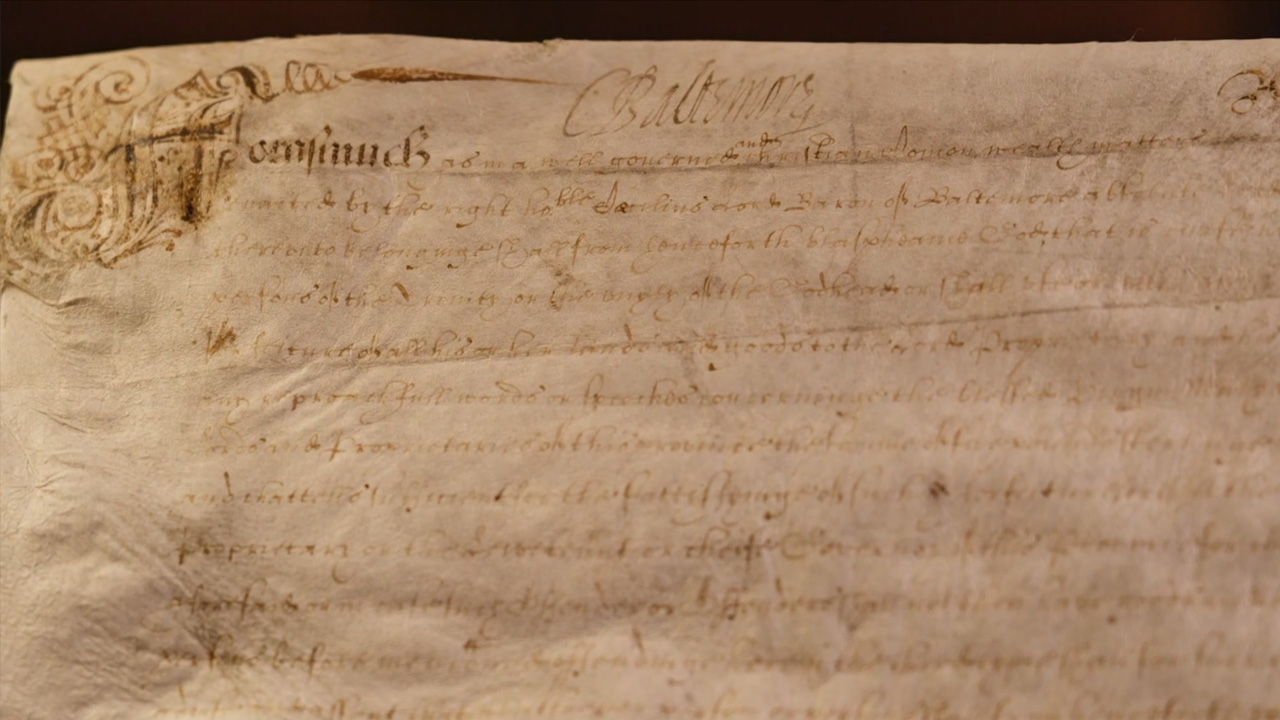
Religious Freedom in Colonial Maryland
Grade 4
Freedom of Religion in Early Maryland
In the 1600s, many people in Europe faced punishment for practicing the religion they believed in. Some groups were not allowed to worship freely, and disagreements about religion sometimes led to conflict. George Calvert, also known as Lord Baltimore, wanted to create a colony in North America where people could practice their faith without fear.
In this lesson, students will explore why religious freedom was important to Maryland's founders and how laws like the Maryland Toleration Act shaped life in the early colony. By studying these ideas, students will learn how people in the past tried to create a place where different religious beliefs could coexist.
Teacher's Guide and Related Standards
Students will explain why religious conflict occurred in colonial Maryland and evaluate how the Maryland Toleration Act tried to protect religious freedom.
- Why was freedom of religion important to Maryland’s founders?
- How did the Maryland Toleration Act try to solve religious disagreements?
- Who benefited from the Toleration Act, and who did not?
- How successful was Maryland’s Toleration Act in protecting religious freedom?
Film Clip
- How was religion in Maryland different from religion in England or the Virginia colony?
- What does the phrase “liberty of conscience” mean?
- Why is archaeology important for learning about the history of the Avalon Colony?
- What did the 1649 Act Concerning Religion do? Why was it important?
- What did the design of St. Mary’s City symbolize?
Vocabulary
Supplemental Enrichment Activities
Religious Freedom in America
Throughout history, many people have disagreed about religion and how it should be practiced. In some places, only certain religious groups were allowed to worship freely, while others faced restrictions or conflict. Over time, ideas about religious freedom developed as people looked for ways to allow different groups to live together peacefully.
Visit the website of the National Museum of American Religion to watch a short animated video about the history of religious freedom in America. Then explore the interactive map to see where different religious groups lived at different times. As you explore, think about how religious diversity and conflict helped shape laws about religious freedom.
» Go to The National Museum of American Religion: American Religion and Lifeways
Exploring Life in St. Mary’s City
The capital city of Maryland, St. Mary's City, grew and changed during the early years of the colony. By 1685, more than 50 years after the first settlers arrived, the small settlement had developed into the political and economic center of Maryland. Homes, plantations, a chapel, and a state house had been built, and leaders gathered there to create laws and guide the colony’s future.
Visit the interactive map of St. Mary’s City to explore what the town may have looked like in 1685. Using information discovered by archaeologists and historians, artists created a detailed drawing of the settlement. As you explore the buildings, streets, and plantations, pay attention to the activities, jobs, and places that helped shape life in the early Maryland colony, including the role that religion plays in the landscape.
Celebrating Religious Tolerance Day
Each year on January 16, Maryland celebrates Religious Tolerance Day. This holiday remembers the early efforts in the Maryland colony to allow people with different religious beliefs to live together peacefully. Although disagreements still happened, Maryland’s leaders tried to create laws that protected people’s right to worship without fear.
Now, the Maryland governor’s office has a Council on Interfaith Outreach to carry on that tradition of religious acceptance. Visit the page to learn the mission of this group.
Imagine you are part of the Council on Interfaith Outreach and you are planning a celebration for Religious Tolerance Day in Maryland. What kinds of activities could help people learn about and celebrate different beliefs and religions?
Describe what your Religious Tolerance Day celebration would include and how it would help people remember the importance of respecting different beliefs.
» Go to The Office of Governor Wes Moore: Council on Interfaith Outreach