Geography and Archaeology in the Avalon Colony
Grade 4
Teacher’s Guide and Related Standards
In this lesson, students will learn how geography influences settlement patterns and how archaeology can help us understand early colonial settlements. They will learn about the Avalon Colony in Newfoundland and compare it to the Calverts’ later colony of St. Mary’s City.
Procedure
INTRODUCTION (20 minutes)
- To hook students into the lesson, show them two images: one of St. Mary’s City, Maryland, and the other of the Avalon Peninsula, Newfoundland. Ask them the following questions:
- What natural features do you notice? What natural resources are available?
- Where might it be easier to farm? Where might it be easier to fish?
- Where might the climate be harsher? How can you tell?
- What natural features do you notice? What natural resources are available?
- Where would you rather build a colony? Why?
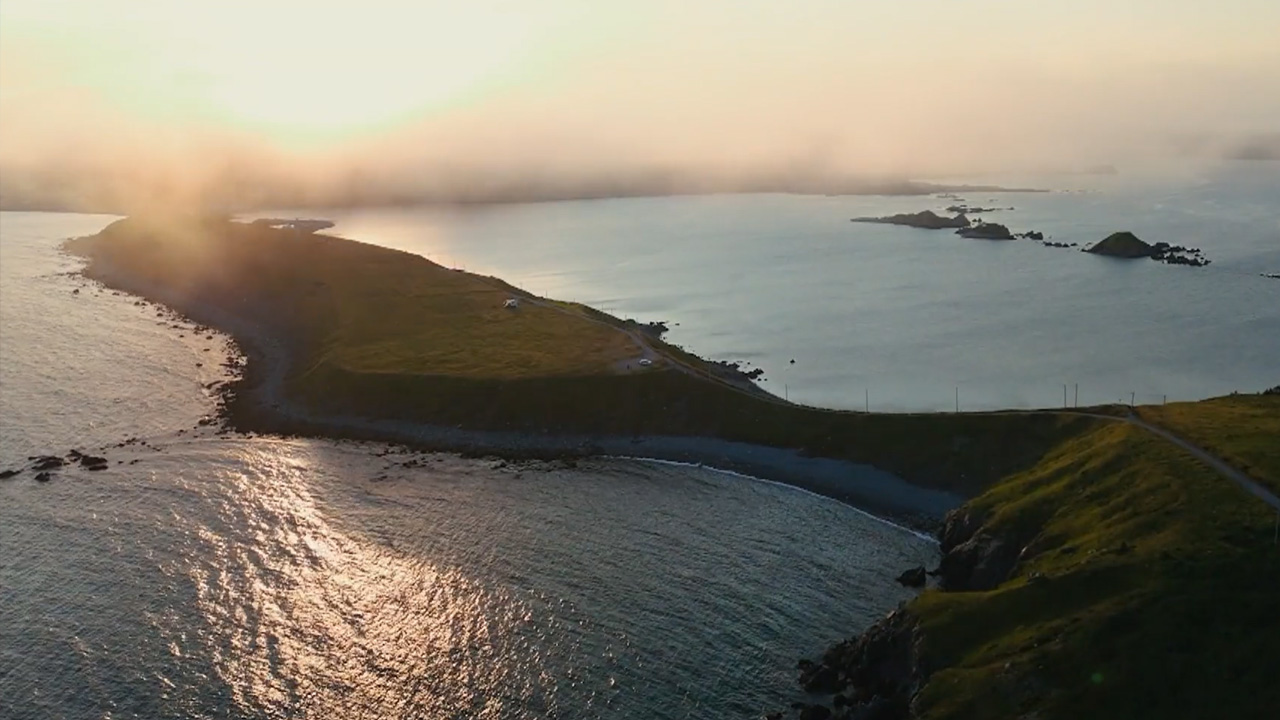
- Explain that students will be learning about the first colony that George Calvert established in Newfoundland, Canada, before later settling in Maryland. Display a world or continent map and help students identify England, Newfoundland, and Maryland. Next, show students the maps and images of St. Mary’s, Maryland, and Ferryland, Newfoundland. Play the video clip.
- Either as a class or in small groups, discuss the Essential Questions and Thinking Questions.
EXTENSION (30-120 minutes)
Complete the supplemental extension activities with students, as you see fit.
SUMMATIVE ASSESSMENT (30 minutes)
Have students apply their newfound knowledge by using the Claim, Evidence, Reasoning (CER) framework to analyze the lesson and support their responses using evidence from the videos and activity resources.
Option 1: How did geography influence the development of the Avalon Colony?
Option 2: How does archaeology help us learn about life in early colonies?
REFLECTION
- What part of this lesson connected with you most? Why?
- How does the new knowledge you gained about geography and archaeology connect to something you already knew or believed?
- How much do you think geography influences people’s lives today? How much do you think it mattered in colonial times?
Standards
MSDE 4.2.2
Students will compare how geography influenced culture and economic development by:.
- analyzing how geography impacted the development of the American colonies
- comparing human, capital, and natural resources of colonial regions. (4.2.2.b)
- D2.Eco.2.3-5. Identify positive and negative incentives that influence the decisions people make.
- D2.Geo.8.3-5. Explain how human settlements and movements relate to the locations and use of various natural resources.
- D2.His.9.3-5. Summarize how different kinds of historical sources are used to explain events in the past.
CER Rubric (Total: 9 Points)
| Category | 3 Points | 2 Points | 1 Point | 0 Points |
|---|---|---|---|---|
| Claim | I clearly answered the question I chose (geography’s influence or archaeology’s importance). My claim fully addresses the topic. | I answered the question, but my claim may be somewhat unclear or incomplete. | My claim is unclear, too general, or does not fully answer the question. | No claim. |
| Evidence | I used specific, accurate facts from the lesson (e.g., geography, natural resources, climate, artifacts, buildings, or discoveries). | I used some evidence, but it may be general, lack detail, or need more explanation. | I gave limited, weak, or unclear evidence. | No evidence. |
| Reasoning | I clearly explained how my evidence supports my claim and connects to geography or archaeology. | I explained my thinking, but the connection between the evidence and the claim is not fully clear. | My reasoning was unclear, incomplete, and largely repeated the evidence. | No reasoning. |
References
PBS, Liberty of Conscience: The Founding of Maryland - A film clip from Liberty of Conscience: The Founding of Maryland was used in this lesson. Continue to watch the full documentary to learn more about the founding of colonial Maryland and the influence of the Calvert family.