Indigenous Geographic Values and Connections to the Land
Grade 4
Teacher’s Guide and Related Standards
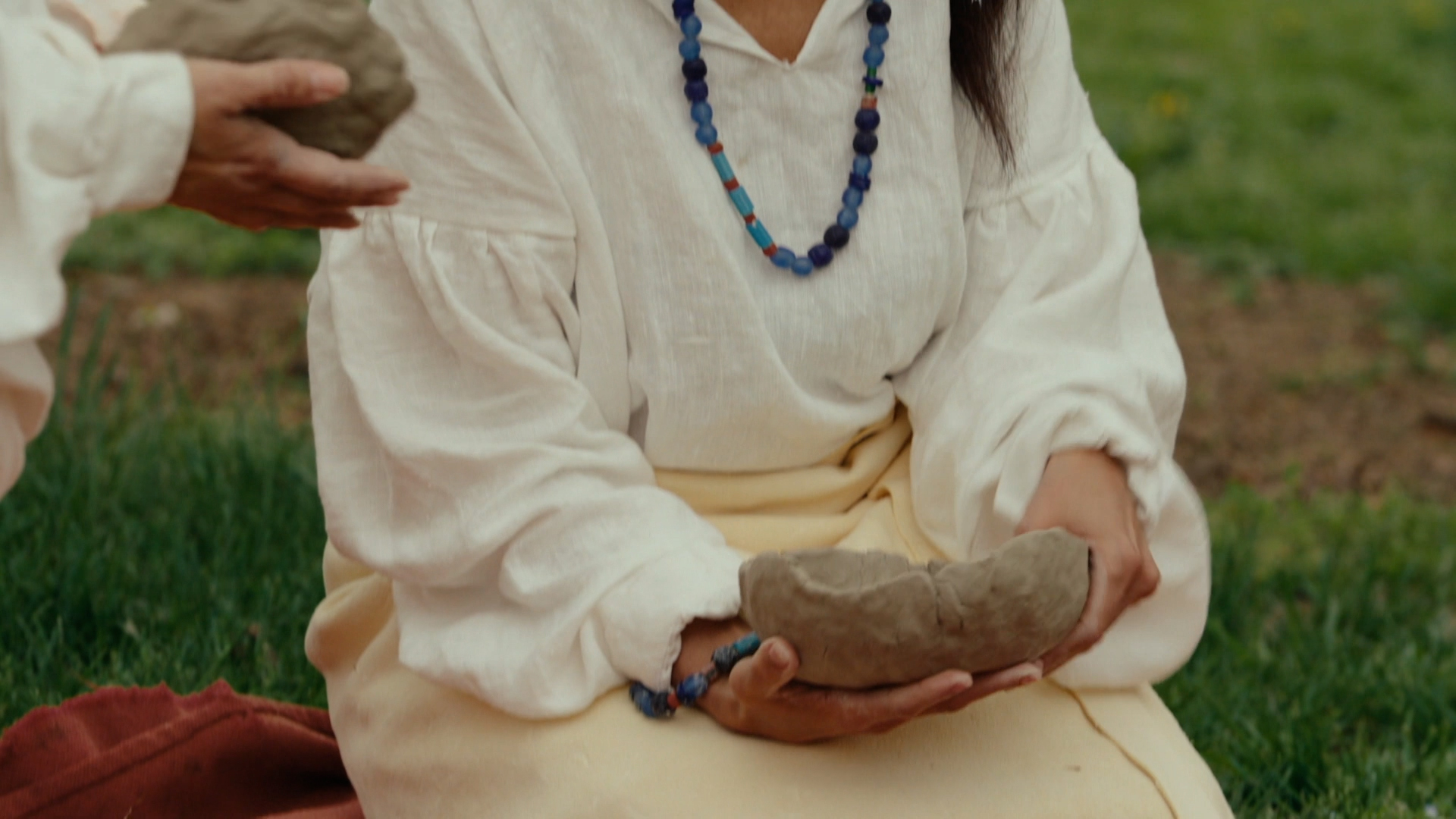
In this lesson, students will learn how societies in the Americas shaped and were shaped by their environment. Students will examine sources from Maryland Indigenous tribal members to understand how geography influences the lifeways, economies, and cultural practices of Indigenous communities.
Procedure
INTRODUCTION (20 minutes)
- Have students discuss two warm-up questions:
- What kinds of natural resources do you see in Maryland (water, forests, animals)? How might people use them?
- What does it mean for a community to share resources?
- Review the vocabulary words with students.
- Watch the video clip. Have students respond to the Thinking Questions in Think-Pair -Share format.
EXTENSION (20-40 minutes)
Complete the supplemental extension activities with students, as you see fit.
SUMMATIVE ASSESSMENT (30 minutes)
- Have students apply their newfound knowledge by using the Claim, Evidence, Reasoning (CER) framework to analyze the lesson and support their responses using evidence from the videos and activity resources. CER Question: How did the geography and environment of Maryland shape Indigenous communities?
- See the rubric below.
REFLECTION (30 minutes)
- Have students respond to the following prompts:?
- How did Indigenous communities use natural resources responsibly?
- What is one thing you learned today that changed how you think about Maryland’s land and the people who originally cared for it?
Standards
MSDE 4.2.3
Students will analyze the methods and motivations by which freedom was granted or denied for various groups in Colonial North America:
- interpreting laws and legal documents that defined freedom for women, indentured servants, American Indians, religious groups, and free blacks in the colonies. (4.2.3.a)
- D4.3.3-5. Present a summary of arguments and explanations to others outside the classroom using print and oral technologies (e.g., posters, essays, letters, debates, speeches, and reports) and digital technologies (e.g., Internet, social media, and digital documentary).
- D2.His.10.3-5. Compare information provided by different historical sources about the past.
CER Rubric (Total: 9 Points)
| Category | 3 Points | 2 Points | 1 Point | 0 Points |
|---|---|---|---|---|
| Claim | I clearly answered how Maryland’s geography and environment shaped Indigenous communities. | I answered part of the question, or my claim is somewhat unclear. | My claim is unclear or doesn’t really answer the question. | No claim. |
| Evidence | I used specific facts from class (examples of land use, natural resources, lifeways, or cultural practices). | I used some evidence, but it may be general or missing details. | I gave little or weak evidence, or it doesn’t fit the topic. | No evidence. |
| Reasoning | I clearly explained how my evidence shows how geography and environment shaped Indigenous communities. | I explained my thinking, but the connection is not fully clear. | My reasoning is missing or confusing. | No reasoning. |
Teacher Resources
- MASC, Land Acknowledgment – This guide provides the land acknowledgments each Maryland tribe has approved , along with maps of the land each tribe lives or lived on.
- Thinkport, TPS in the Classroom: Using the Maryland Indigenous Inquiry Kits: Mayis Indigenous Records – This professional development module is a guide to Thinkport’s collection of inquiry kits that use sources about Indigenous people in Maryland. This page discusses how Indigenous people appear in sources created by white people.
- Maryland State Archives, Mayis Indigenous Records: Indigenous Archive Project for the Eastern Shore of Maryland – This page is home to Maryland State Archives’ oral history project highlighting the stories and experiences of Indigenous people on the Eastern Shore of Maryland.
References
PBS, Liberty of Conscience: The Founding of Maryland - A film clip from Liberty of Conscience: The Founding of Maryland was used in this lesson. Continue to watch the full documentary to learn more about the founding of colonial Maryland and the influence of the Calvert family.