Freedom and Fairness in Colonial Maryland
Grade 4
Teacher’s Guide and Related Standards
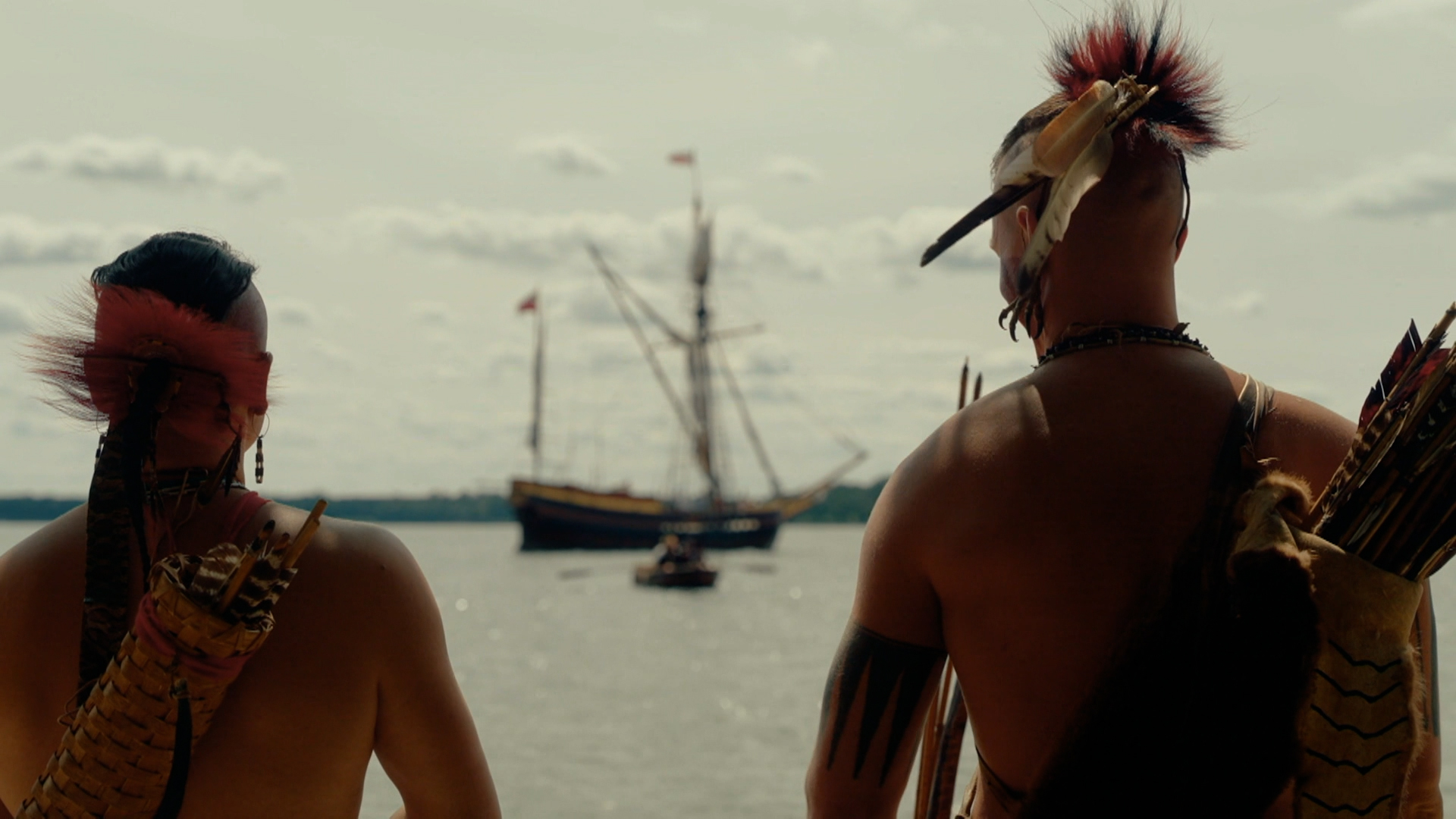
In this lesson, students will learn about what freedom and fairness meant for different people in the early Maryland colony. They will explore three perspectives: an Indigenous leader, an English woman colonist, and an African indentured servant, to learn how freedom might have been granted or limited.
Procedure
Students will research one of three key historical figures featured in the documentary: Mathias de Sousa (first Black Marylander); Margaret Brent (executor of Calvert estate, first woman in the English North American colonies to appear before a court of the common law); or Chief Wannas of the Piscataway (first Native American chief to make contact with English settlers in Maryland). Their task will be to design a memorial, exhibit, or presentation about their chosen historical figure and the challenges they faced.
INTRODUCTION (20 minutes)
- Instruct students to examine the memorial of Mathias de Sousa in St. Mary’s City. Ask them the following questions:
- What can we learn about Mathias de Sousa from this memorial?
- What challenges did he experience? How did he overcome them?
- Why should he be memorialized?
- Watch the video clips with students. Have students respond to the Thinking Questions in a Think-Pair-Share format.
EXTENSION (20-40 minutes)
Complete the supplemental extension activities with students, as you see fit.
SUMMATIVE ASSESSMENT (30 minutes)
- Create a memorial, exhibit, or presentation highlighting the life and experience of one of the three historical figures (Chief Wannas, Margaret Brent, or Mathias de Sousa) from this lesson. Students can use the sources in the “Research Support” section to investigate their topic. Memorials should identify the challenges each person faced because of who they were and what they did to try to gain, protect, or use their freedom.
- See the rubric below.
REFLECTION (10 minutes)
- Which historical figure’s story stood out to you the most? Why?
- What did you learn about freedom in colonial Maryland that surprised you?
- How does what you learned about freedom in the past connect to what you know about fairness today?
Standards
MSDE 4.2.3
Students will analyze the methods and motivations by which freedom was granted or denied for various groups in Colonial North America:
- interpreting laws and legal documents that defined freedom for women, indentured servants, American Indians, religious groups, and free blacks in the colonies. (4.2.3.a)
- D4.3.3-5. Present a summary of arguments and explanations to others outside the classroom using print and oral technologies (e.g., posters, essays, letters, debates, speeches, and reports) and digital technologies (e.g., Internet, social media, and digital documentary).
- D2.His.10.3-5. Compare information provided by different historical sources about the past.
Research Support
Students can use these sources to identify the challenges each person faced because of who they were and what they did to try to gain, protect, or use their freedom.
Exploring Maryland’s Roots Library: Margaret Brent (1601-1671)
Archives of Maryland (Biographical Series) - Archives of Maryland (Biographical Series): Mathias de Sousa
CER Rubric (Total: 9 Points)
| Category | 3 Points | 2 Points | 1 Point | 0 Points |
|---|---|---|---|---|
| Claim | I clearly answered the question I chose (geography’s influence or archaeology’s importance). My claim fully addresses the topic. | I answered the question, but my claim may be somewhat unclear or incomplete. | My claim is unclear, too general, or does not fully answer the question. | No claim. |
| Evidence | I used specific, accurate facts from the lesson (e.g., geography, natural resources, climate, artifacts, buildings, or discoveries). | I used some evidence, but it may be general, lack detail, or need more explanation. | I gave limited, weak, or unclear evidence. | No evidence. |
| Reasoning | I clearly explained how my evidence supports my claim and connects to geography or archaeology. | I explained my thinking, but the connection between the evidence and the claim is not fully clear. | My reasoning was unclear, incomplete, and largely repeated the evidence. | No reasoning. |
References
PBS, Liberty of Conscience: The Founding of Maryland - A film clip from Liberty of Conscience: The Founding of Maryland was used in this lesson. Continue to watch the full documentary to learn more about the founding of colonial Maryland and the influence of the Calvert family.